Honey, It's Not Just a Blouse: How Your Clothes Can Improve Your Life.
I have a theory, which I have tested on myself and on more than a few clients, that the way you dress is one of the quickest and most affordable ways to change the direction of your day, and eventually your life. I am not suggesting that a new blazer will fix your finances or that a good pair of jeans can mend a broken heart, but I am saying that the clothes you put on each morning send a message to the people around you and, more importantly, to yourself. When that message is "I have given up," the day tends to agree with you, and when it is "I know exactly who I am," the day tends to rise to meet you.
Why What You Wear Matters
There is actual research behind this, and psychologists even have a name for it, enclothed cognition. In a well-known 2012 study by Hajo Adam and Adam Galinsky, participants who wore a lab coat described as a doctor's coat performed better on attention tasks than those who wore the same coat described as a painter's coat, which suggests that the meaning we attach to our clothes can shape how we think and behave. Later studies have had mixed results, so I would not treat it as magic, but it lines up with what I see over and over in real life: when someone wears clothes that fit well and reflect the person they want to be, they stand taller, speak more clearly, and take up the room they deserve. Add to that the simple fact that other people form quick impressions based on our appearance, and you begin to see why a thoughtful wardrobe is less about vanity and more about being able to walk into a situation with one less thing to worry about.
Start With a Closet Edit
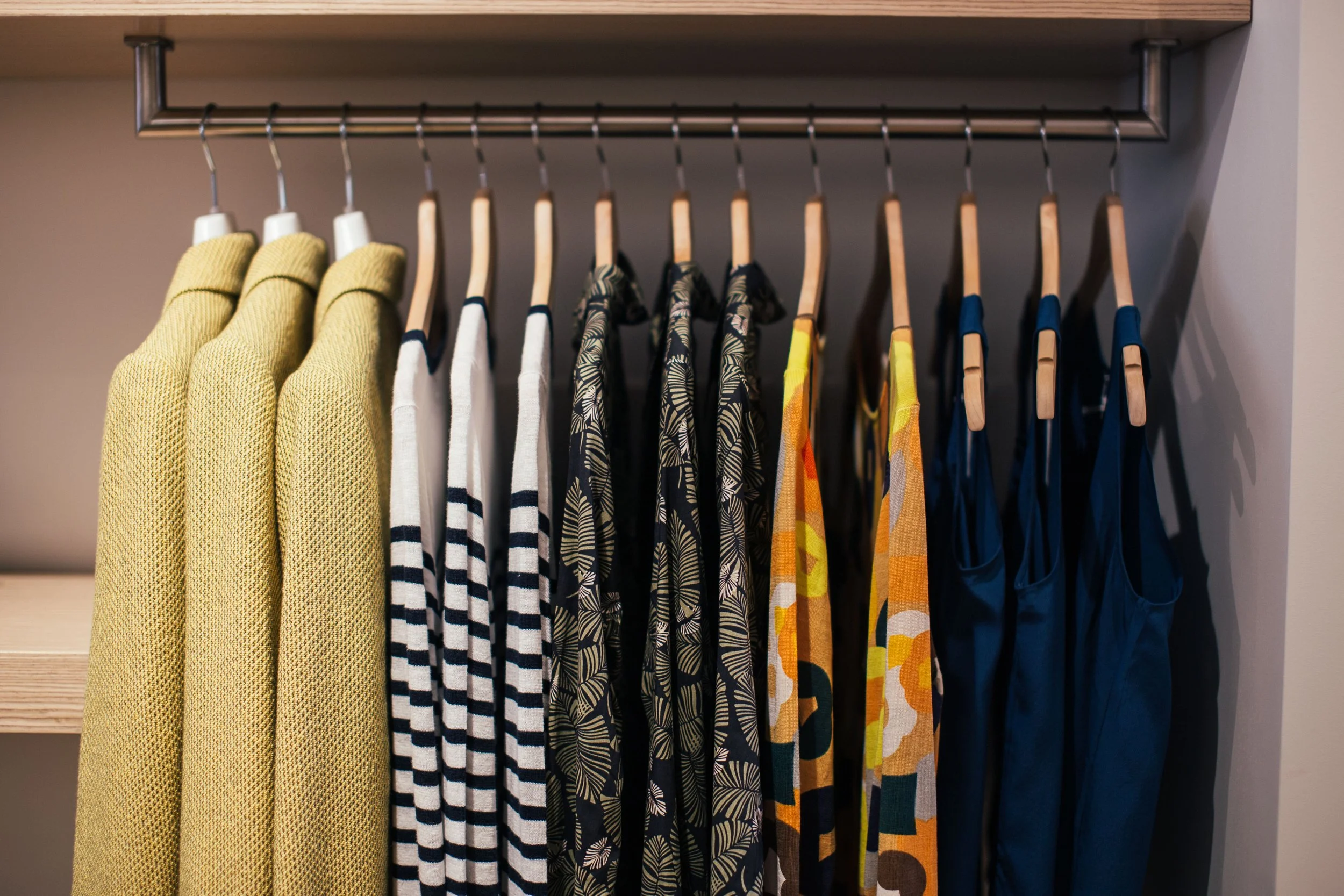
Before you buy a single thing, take an honest look at what you already own, because most of us wear roughly twenty percent of our closet eighty percent of the time. Pull everything out if you can, or work one category at a time, and sort each piece into four piles: love and wear often, love but need to fix or tailor, keep for a specific purpose, and let go. Be especially honest about the pieces you keep for a future version of yourself, whether that is a smaller size, a different job, or a vacation that is not on the calendar, because clothes that do not fit your life right now take up space and quietly make you feel worse every morning. Donate, resell, or pass along what is not working, and notice how much lighter your mornings become once you can actually see what you have.
Practical Ways to Dress for the Life You Want
Once you have cleared the clutter, these are the steps I find make the biggest difference, and none of them require a big budget.
Define your style in a few words: Try the Three-Word Method popularized by stylist Allison Bornstein, in which you choose one word for the outfit you wear most, one for the way you want to be perceived, and one for the way you want to feel, so that every purchase has a filter. If a piece does not fit your words, it does not come home with you.
Prioritize fit over everything: A modest, well-fitted piece beats an expensive one that pulls, gapes, or swallows you. A tailor can hem trousers, take in a waist, or shorten sleeves for a fraction of what a new garment costs, so budget for alterations on the things you love.
Build outfit formulas: Choose five or six combinations that you know work, such as a tailored trouser with a fitted knit and loafers, and keep them handy so that getting dressed takes two minutes instead of twenty. Take photos of the looks you love so you can repeat them on the mornings your brain is not cooperating.
Wear colors that flatter your face: Hold a few shades near your face in natural light and notice which ones make your skin look rested and your eyes look bright. Then lean into those colors for the pieces that sit closest to your face, like tops, scarves, and jewelry.
Invest where it counts: Spend more on the items you wear constantly, like a great coat, a good pair of jeans, comfortable shoes, and a bag that holds up, and save on trendy pieces you will wear a handful of times. Judge each purchase by cost per wear rather than by the price tag.
Dress for the day you want to have: If you are job hunting, working from home, or rebuilding after a hard season, get dressed anyway, with something that makes you stand up straighter. It does not need to be fancy, only intentional.
Care for what you own: Steam wrinkles, replace worn heels, remove pilling, and keep your shoes clean, because well-maintained basics look more expensive than they are.
When Your Wardrobe Changes, So Do You
The real magic of all this is not the clothes themselves but what they make possible, because when getting dressed stops being a daily source of stress, you free up energy and confidence for everything else. Over time, I have watched women walk into interviews, first dates, and difficult conversations with a different kind of posture simply because they knew they looked like themselves. That is the kind of change that ripples outward, and it starts on an ordinary morning with a closet that actually works for you.
If you would like help getting there, whether through a closet edit, a styling session, or a little guidance on finding your own three words, I would love to be your aide in the process.